design
Services are the new electricity. Service integration is the new power cable.
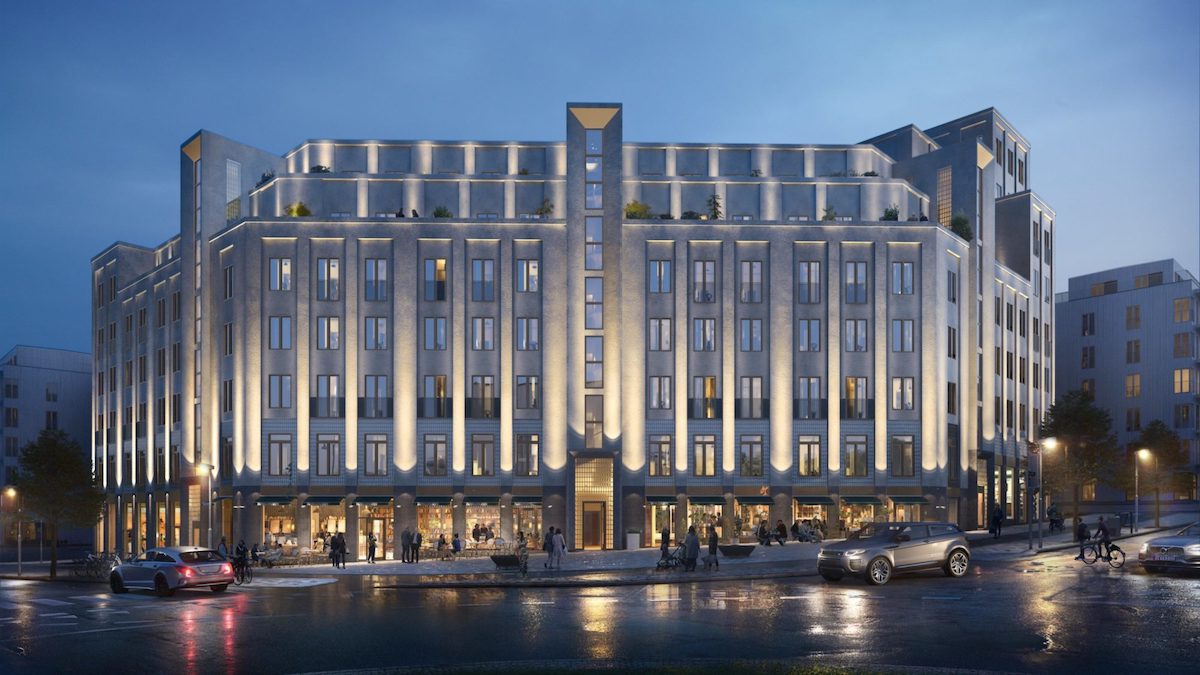
Designing buildings and cities for integrated services is partly about resolving today's pressures: corridors, lobbies and sidewalks cannot be free logistics and mobility hubs.
And it's also about capturing new opportunities, including new formats of buildings, blocks and communities including coliving and coworking; in-house concepts such as cafés, restaurants, stores, mobility, lockers; urban concepts such as cloud kitchens, mobility sharing; and circular economy features like rental, returns, repairs, and bulk logistics.
Last Meter includes architectural tools and partnerships to integrate services deeply during all phases of design. Get in touch to find out more: info@lastmeter.info.
buildings
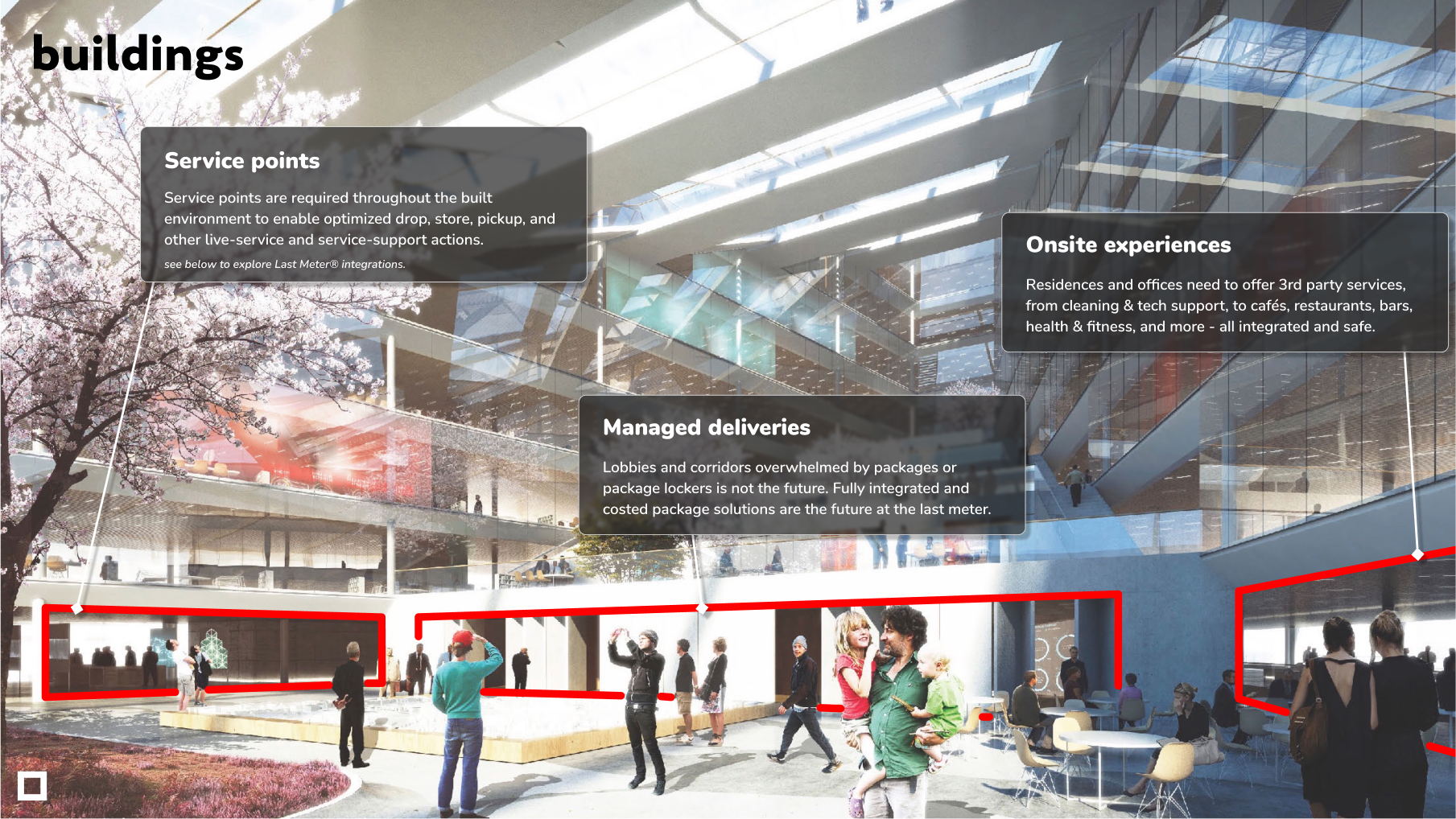
Service points
Service points are required throughout the built environment to enable optimized drop, store, pickup, and other live-service and service-support actions.
Managed deliveries
Lobbies and corridors overwhelmed by packages or package lockers is not the future. Fully integrated and costed package solutions are the future at the last meter.
Onsite experiences
Residences and offices need to offer 3rd party services, from cleaning & tech support, to cafés, restaurants, bars, health & fitness, and more - all integrated and safe.
blocks
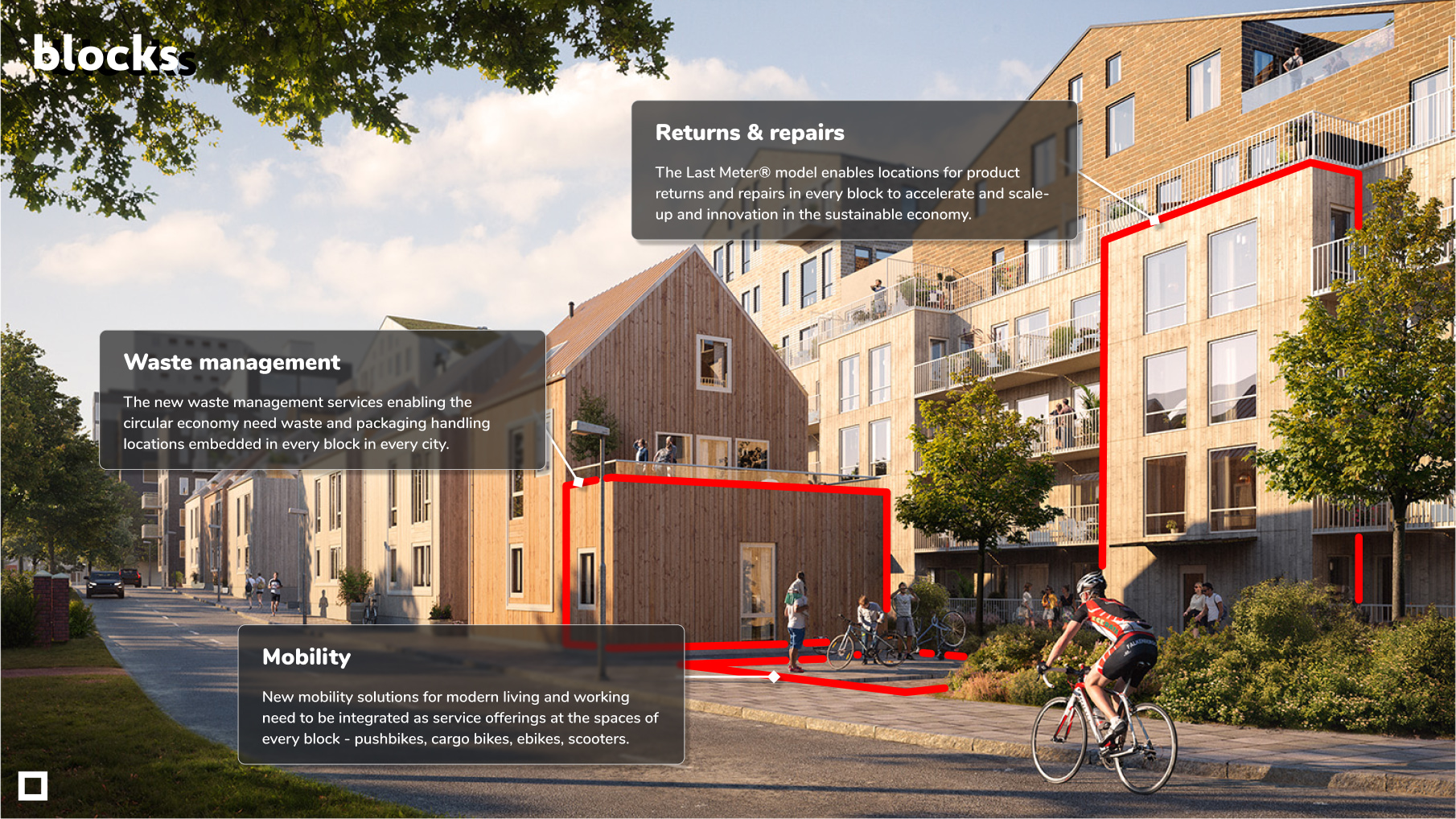
Returns & repairs
The Last Meter® model enables locations for product returns and repairs in every block to accelerate and scale-up and innovation in the sustainable economy.
Waste management
The new waste management services enabling the circular economy need waste and packaging handling locations embedded in every block in every city.
Mobility
New mobility solutions for modern living and working need to be integrated as service offerings at the spaces of every block - pushbikes, cargo bikes, ebikes, scooters.
communities
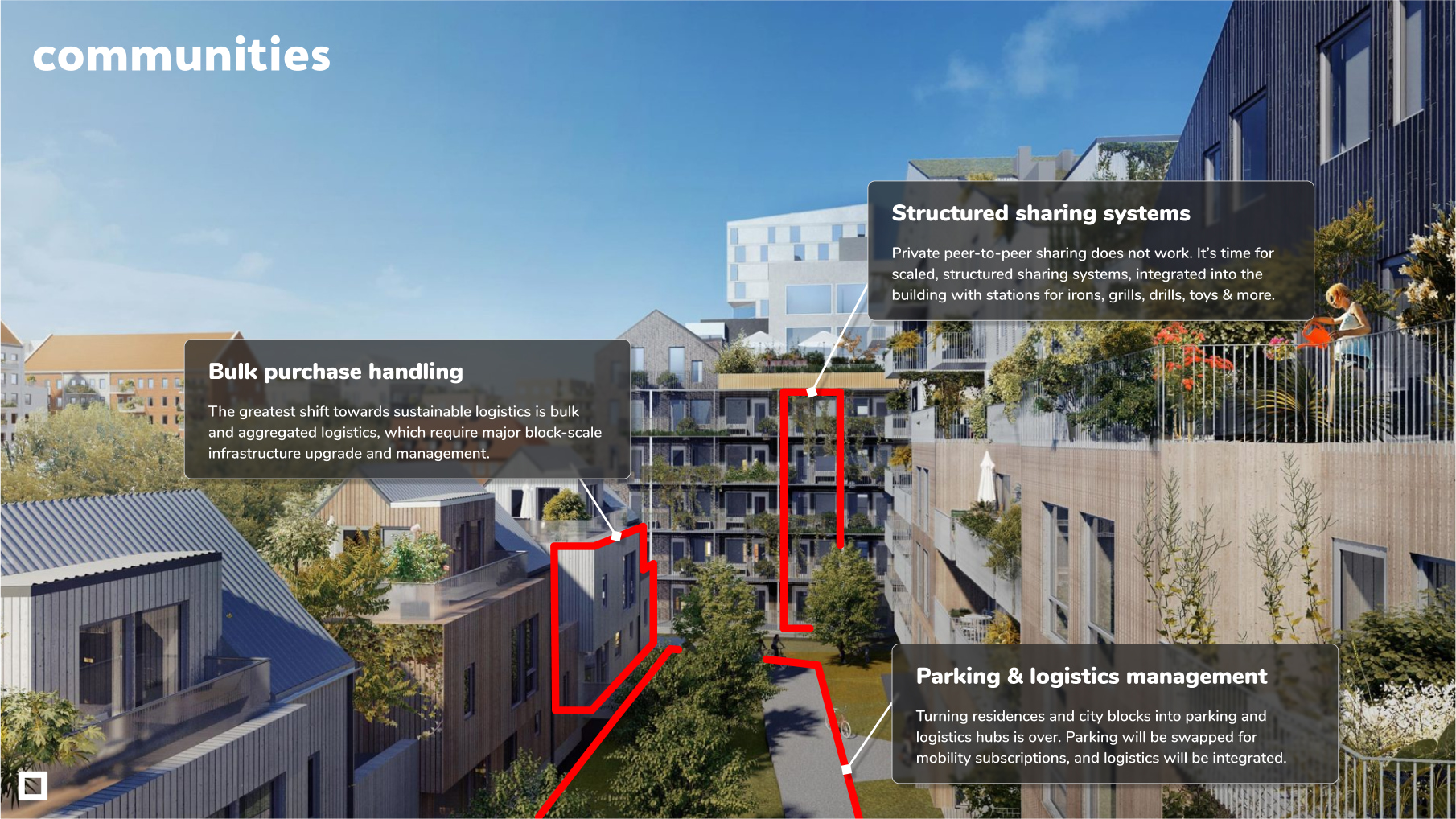
Structured sharing systems
Private peer-to-peer sharing does not work. It's time for scaled, structured sharing systems, integrated into the building with stations for irons, grills, drills, toys & more.
Bulk purchase handling
The greatest shift towards sustainable logistics is bulk and aggregated logistics, which require major block-scale infrastructure upgrade and management.
Parking & logistics management
Turning residences and city blocks into parking and logistics hubs is over. Parking will be swapped for mobility subscriptions, and logistics will be integrated.
centres
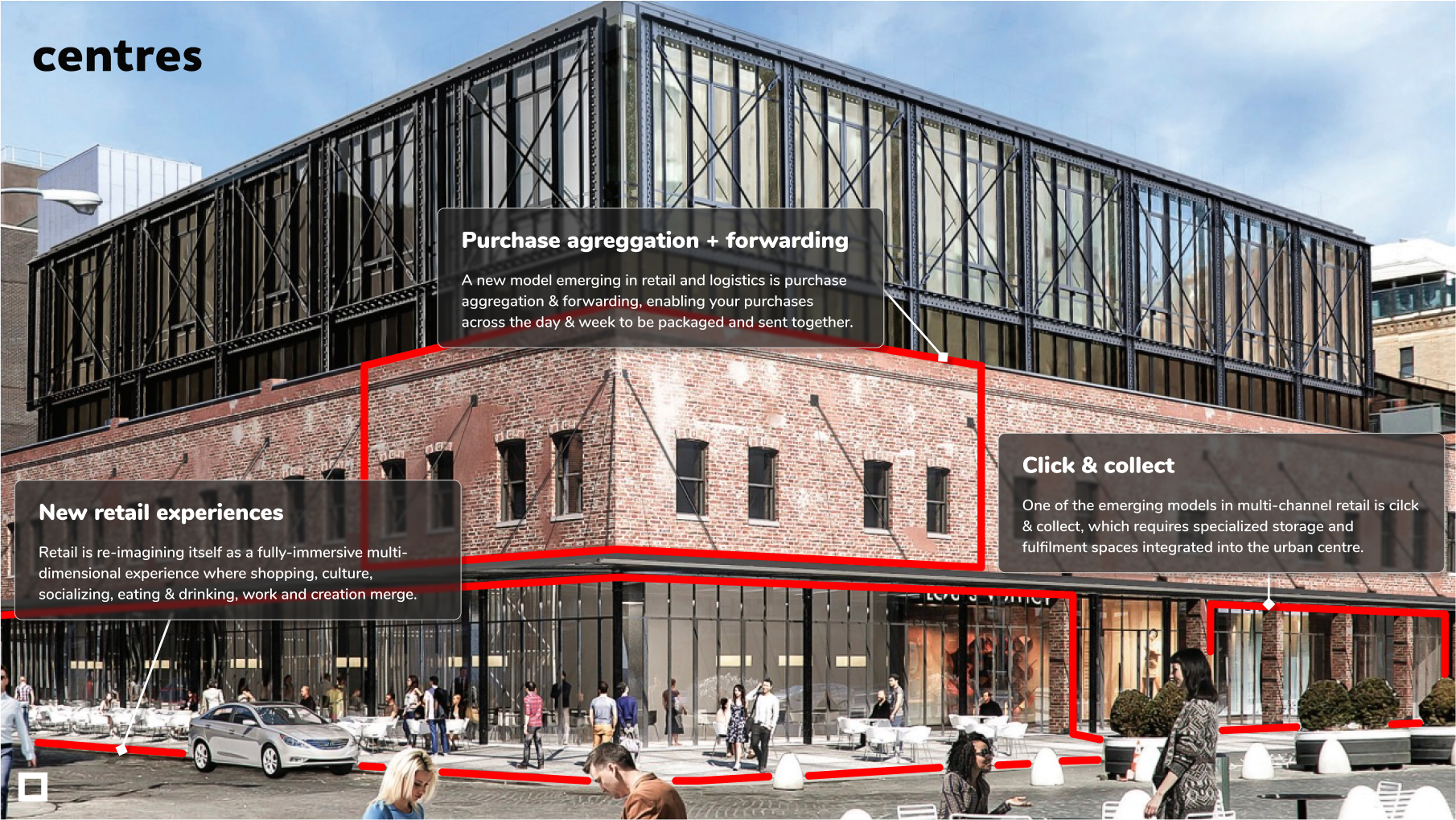
Purchase aggregation + forwarding
A new model emerging in retail and logistics is purchase aggregation & forwarding, enabling your purchases across the day & week to be packaged and sent together.
New retail experiences
Retail is re-imagining itself as a fully-immersive multi-dimensional experience where shopping, culture, socializing, eating & drinking, work and creation merge.
Click & collect
One of the emerging models in multi-channel retail is click & collect, which requires specialized storage and fulfilment spaces integrated into the urban centre.
hubs
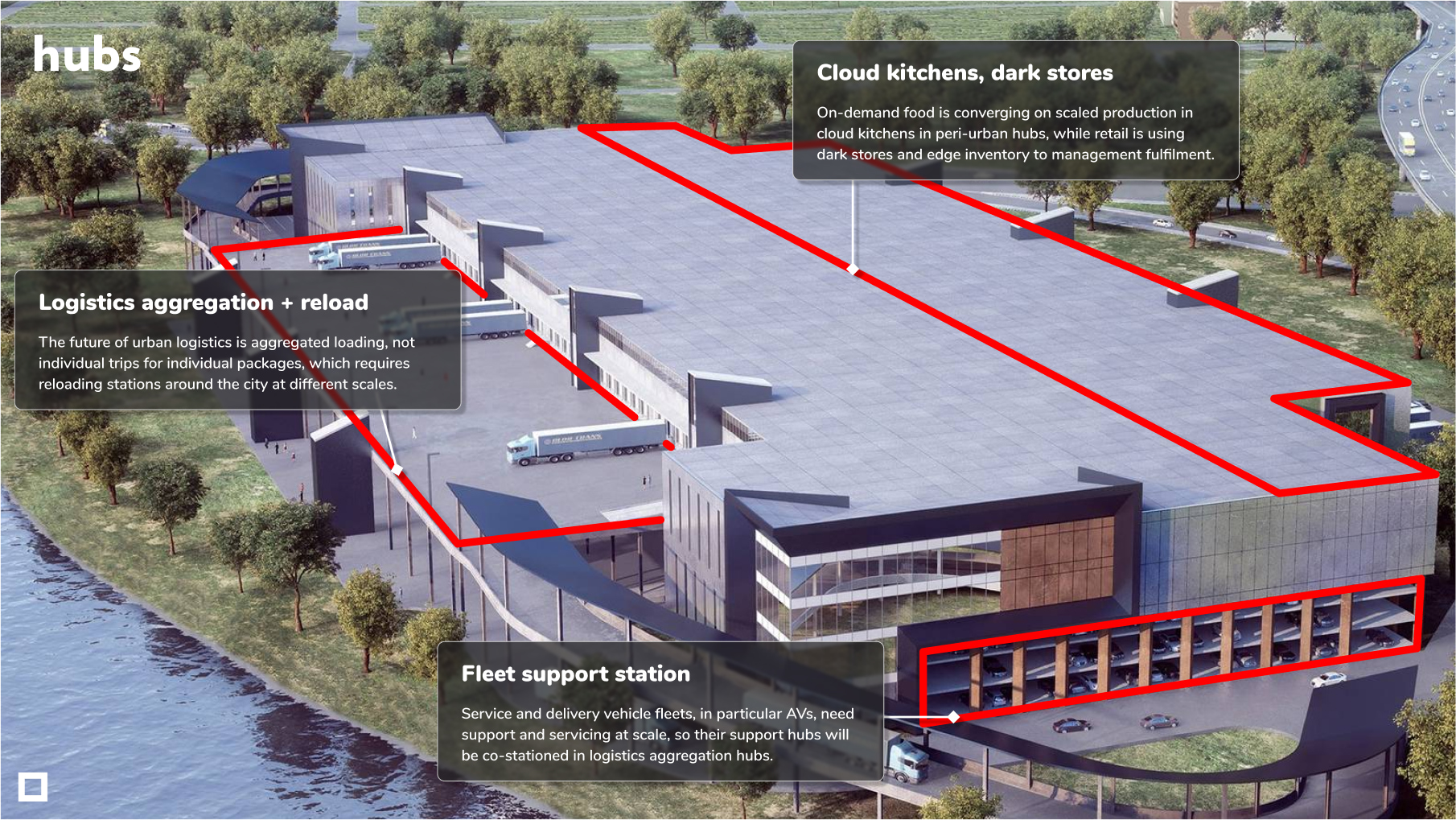
Cloud kitchens, dark stores
On-demand food is converging on scaled production in cloud kitchens in peri-urban hubs, while retail is using dark stores and edge inventory to management fulfilment.
Logistics aggregation + reload
The future of urban logistics is aggregated loading, not individual trips for individual packages, which requires reloading stations around the city at different scales.
Fleet support station
Service and delivery vehicle fleets, in particular AVs, need support and servicing at scale, so their support hubs will be co-stationed in logistics aggregation hubs.
routes
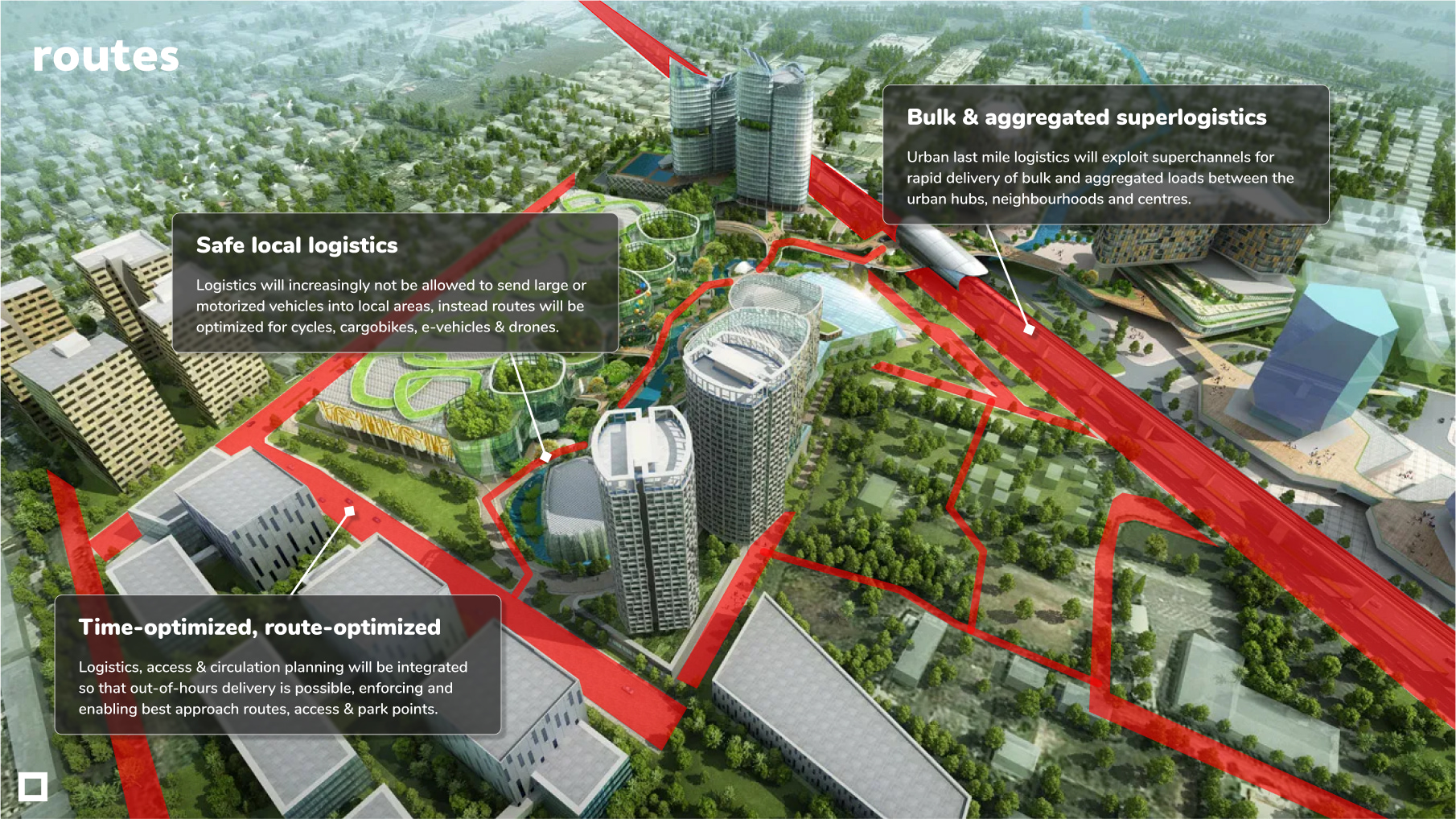
Bulk & aggregated superlogistics
Urban last mile logistics will exploit superchannels for rapid delivery of bulk and aggregated loads between the urban hubs, neighbourhoods and centres.
Safe local logistics
Logistics will increasingly not be allowed to send large or motorized vehicles into local areas, instead routes will be optimized for cycles, cargobikes, e-vehicles & drones.
Time-optimized, route-optimized
Logistics, access & circulation planning will be integrated so that out-of-hours delivery is possible, enforcing and enabling best approach routes, access & park points.
regions
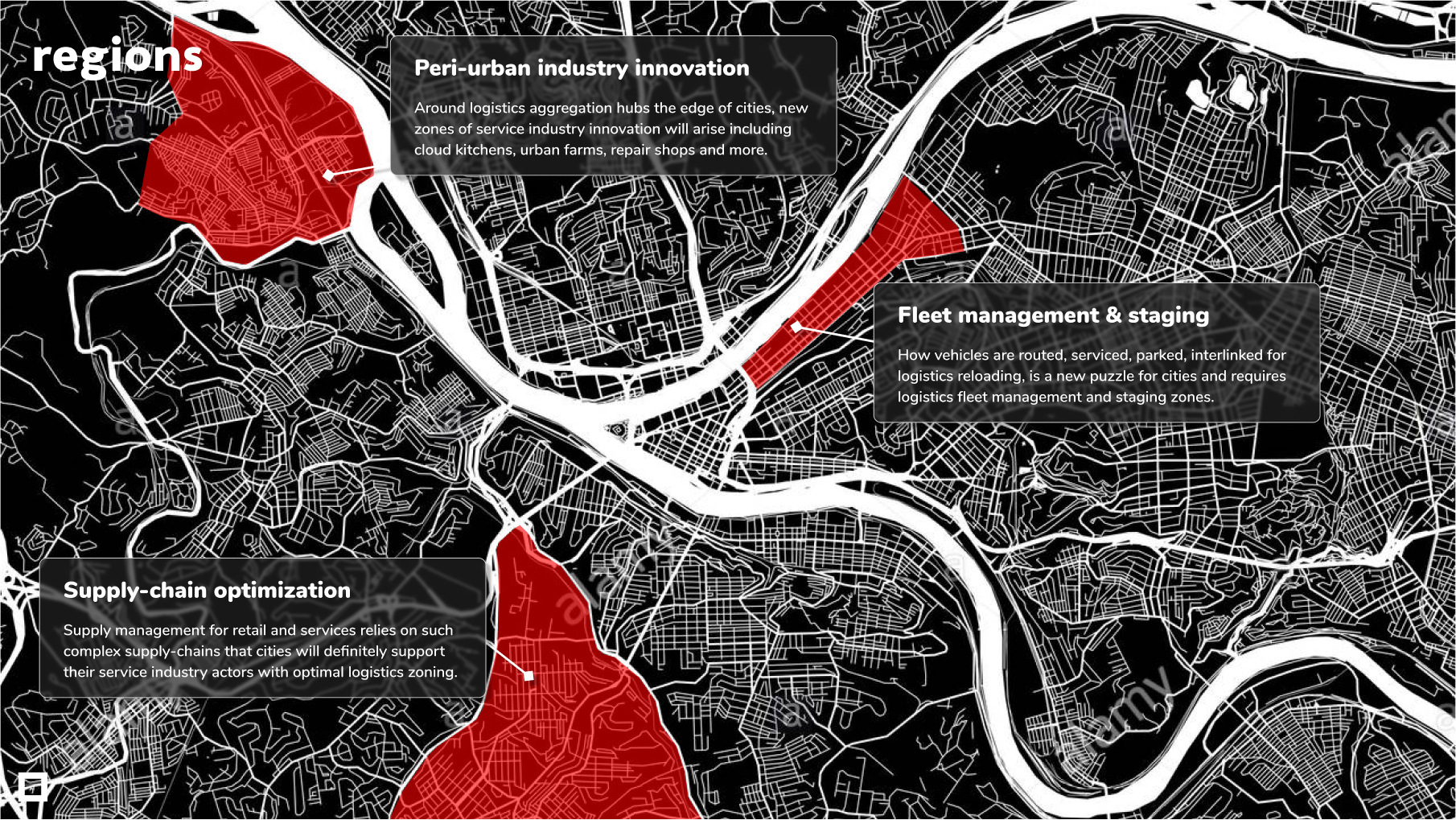
Peri-urban industry innovation
Around logistics aggregation hubs the edge of cities, new zones of service industry innovation will arise including cloud kitchens, urban farms, repair shops and more.
Fleet management & staging
How vehicles are routed, serviced, parked, interlinked for logistics reloading, is a new puzzle for cities and requires logistics fleet management and staging zones.
Supply-chain optimization
Supply management for retail and services relies on such complex supply-chains that cities will definitely support their service industry actors with optimal logistics zoning.